After a few years on the North American side of the world, I was finally able to cross the pond once again. I revisited beautiful Barcelona for the wedding of one of my best friends, and afterward, I decided to travel to Italy, a destination that had been on my bucket list for a long time. We had agreed to meet in Amalfi for a girls’ trip the weekend after the wedding, so with three days to myself, I decided to make Naples my first stop.
I have to be honest: Naples had never been on my bucket list, but Pompeii certainly was. So it seemed like a good base for a day trip to the ancient ruins.
Naples
Naples was my first introduction to Italy, and I’m happy to say that the rest of the country wasn’t quite like this city!
Getting out of the airport was an adventure in itself. I wanted to take a bus, but a police officer kept insisting that the bus I was waiting for wasn’t the one that would take me to my destination. For some reason, he was very persistent about getting me into a taxi.
When the bus finally arrived, he and the bus driver got into a heated discussion about the route, but the driver eventually told me to get on. Wanting to get away from the officer, I quickly jumped aboard.
Once we were on the road, the driver explained that the police officer had been trying to direct me to a taxi station around the corner. According to him, this was a common way of steering tourists toward overpriced taxis, with officers allegedly receiving a cut of the fare.
Luckily, the bus did take me close to my Airbnb, and once I had settled in, I headed out to explore.
My first impression of Naples was that it was a very old and somewhat neglected city. It must have been beautiful at some point, but many parts now look dirty and worn down. It wasn’t just the building facades that could use some care; the way people seemed to treat public spaces also contributed to its character. There was garbage on the ground, cars parked on sidewalks, and vehicles blocking pedestrian crossings.
But despite my initial impressions, I still found plenty of interesting things to do during my full day there.
Your content goes here. Edit or remove this text inline or in the module Content settings. You can also style every aspect of this content in the module Design settings and even apply custom CSS to this text in the module Advanced settings.
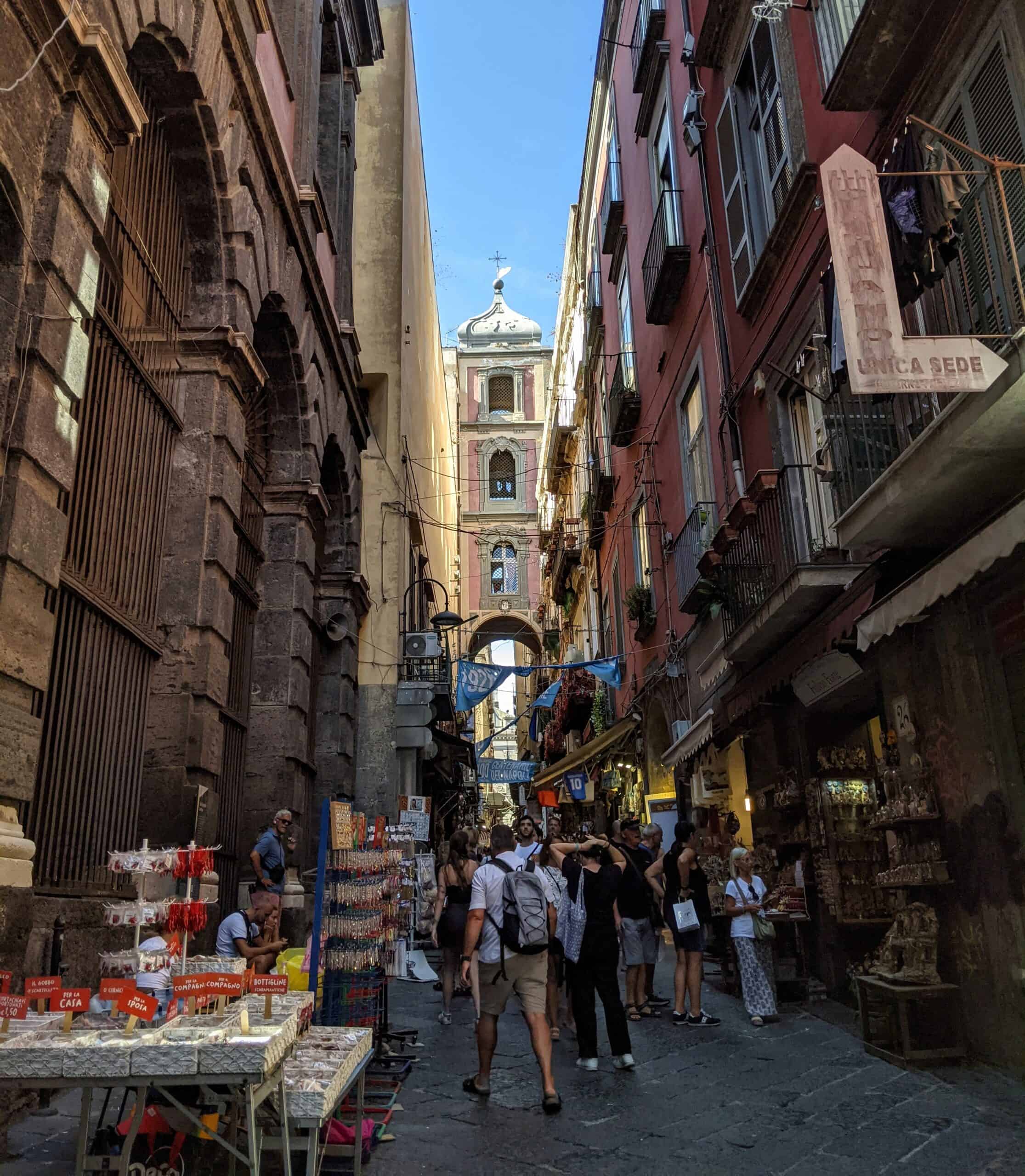
I visited Spaccanapoli, one of the main streets running through the historic center, full of music, souvenir shops, and restaurants. I also wandered through Via San Gregorio Armeno, a fascinating street lined with workshops and stores selling traditional Neapolitan nativity scenes year-round.
I found that when I asked Neapolitans what to do in their own city, most of them directed me to three landmarks. Two are the streets mentioned above. The third is the Maradona Mural (I promise people’s eyes shine when they mention it). I’m not really into football, but for fans, this is one of the city’s most recognizable attractions, along with the countless tributes and memorabilia dedicated to the Argentine football legend. His presence is still very much part of Naples’ identity.
But my favorite experience was exploring Naples’ underground world.
When the Greeks founded Neapolis in the 8th century BC, they began excavating the soft volcanic rock beneath the city to obtain building materials for their houses and walls. Over time, these excavations created an extensive network of underground spaces and tunnels.
The Romans later expanded and adapted parts of this network, developing a sophisticated aqueduct system that brought water from the springs of Serino, around 70 kilometers away. The system supplied Naples and extended to other settlements in the region.
Underground cisterns were used to collect and store water, and the network remained an essential part of the city’s water supply for centuries. Eventually, its use declined as Naples developed modern water infrastructure in the early 20th century.
During the Second World War, these underground spaces took on a new purpose, serving as air-raid shelters where thousands of Neapolitans sought refuge during bombings. Today, these tunnels display objects and traces left behind by the people who sheltered there, including everyday belongings, graffiti, and remnants of their makeshift living spaces.
The visit ended with another fascinating discovery: the remains of an ancient Roman theater hidden beneath the buildings of the historic center.
For centuries, parts of the theater had been incorporated into the foundations and structures of ordinary houses. Some sections are now accessible through a house whose owners have helped preserve and reveal the archaeological remains beneath their property. Much of the ancient theater is still hidden under the surrounding neighborhood, making it a remarkable example of how modern Naples has grown on top of its own history.
It was an incredible introduction to the idea that Italy is practically a living museum, where traces of the past are often hiding just beneath your feet. It also gave me a glimpse of just how influential and powerful the Roman Empire once was.
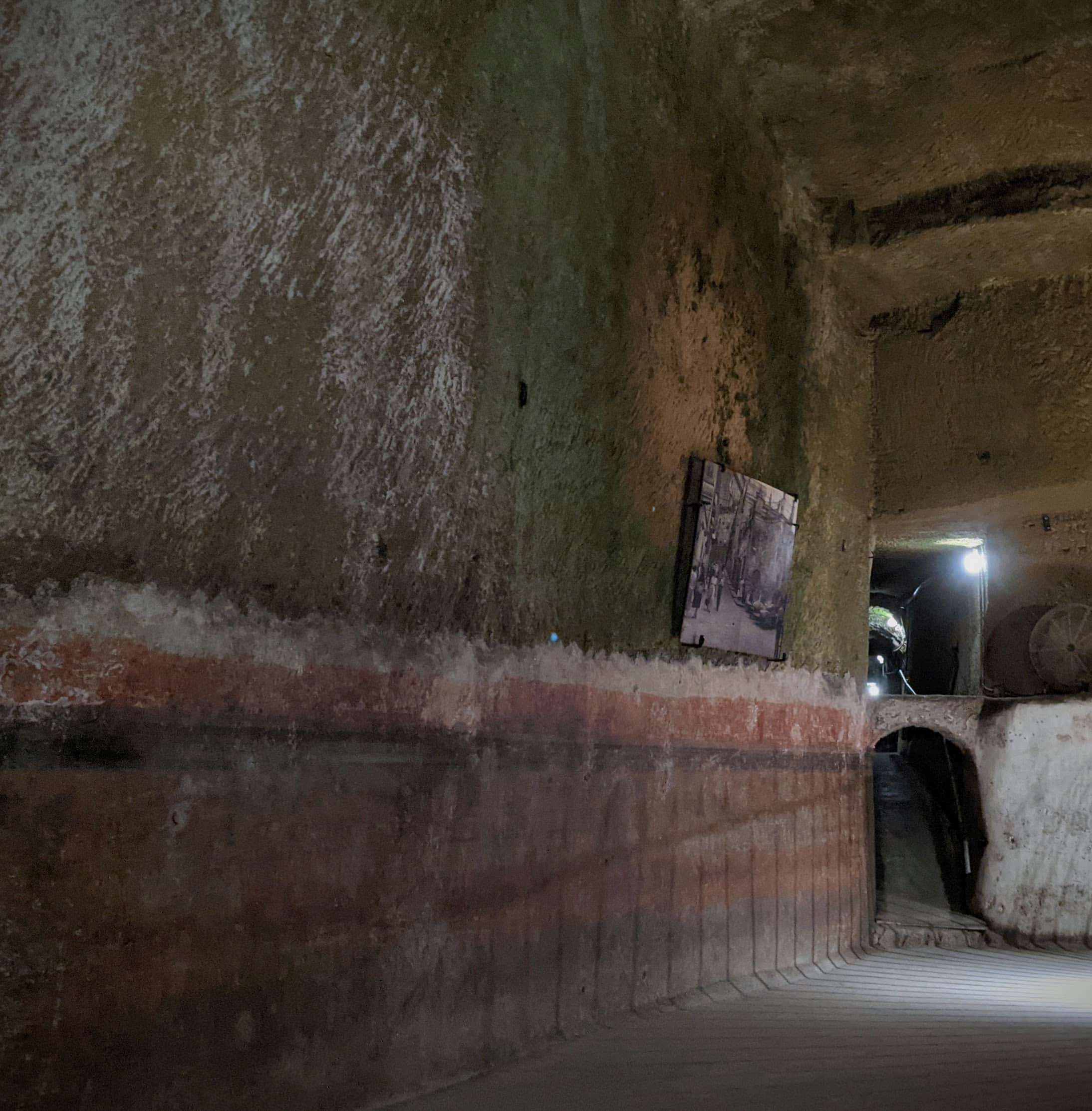
Back when the aqueducts were fully functioning, the water level would be as high as the red section on the wall.
Pompeii
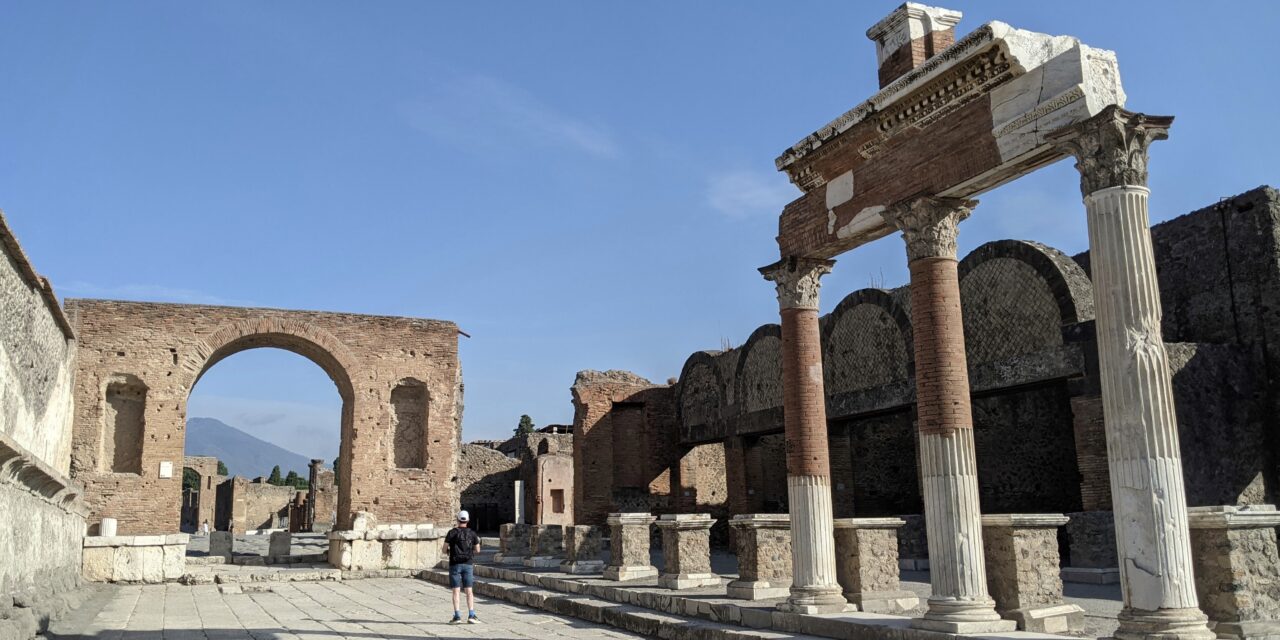
Having dedicated a full day to exploring Pompeii, I woke up early to catch the local train to the archaeological site. It traveled along the coast, passing through a series of somewhat rundown but interesting towns before arriving at the ruins.
I was glad I had packed my parasol and plenty of water because the site gets incredibly hot around midday. There’s so much to explore that you wouldn’t want to miss out on parts of it simply because of the weather.
Pompeii is both wonderful and heartbreaking. It’s amazing to walk through a remarkably preserved Roman city and discover its amphitheater, public baths, temples, gardens, villas, houses, and shops. In many ways, its urban planning seems better thought out than that of some modern cities. Exploring it gives you a real sense of the cultural and architectural legacy the Romans left behind.
Perhaps the most heartbreaking sight in Pompeii was the exhibition of plaster casts of the eruption’s victims. These casts were made by pouring plaster into the cavities left behind after the bodies had decomposed within the hardened volcanic material. The resulting forms preserve the positions and shapes of real people in their final moments.
I was curious at first, but I couldn’t even make it halfway through the exhibition before feeling overwhelmed by the thought of what those people must have experienced as they faced their final moments.
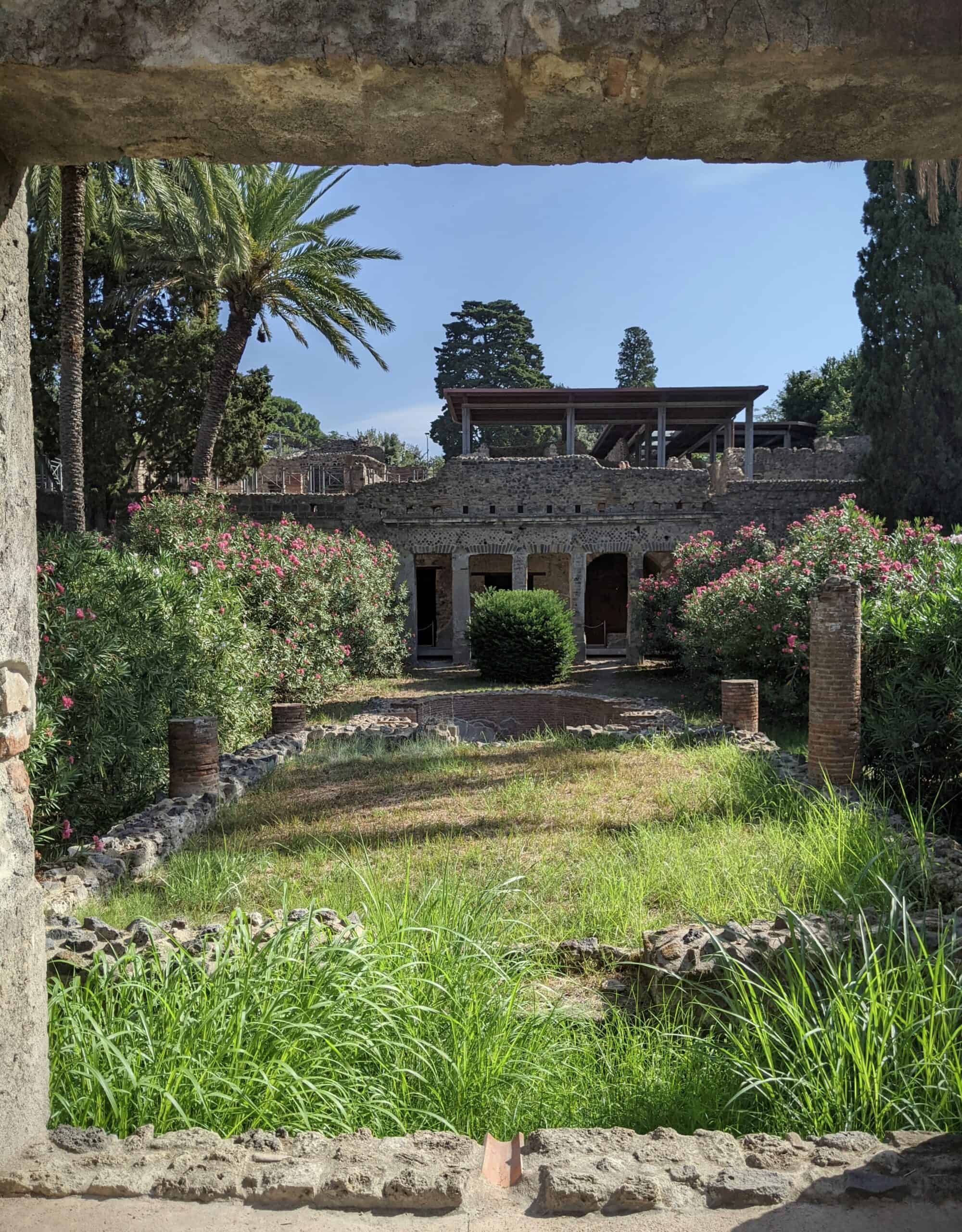
Having a villa in Pompeii was like having a summer house today, with exotic flowers, palm trees, fountains, and dedicated spaces for growing fruit and veggies.
Pompeii was a proper, thriving city, with a diverse population that included wealthy elites, merchants, craftsmen, laborers, freed people, and enslaved people. Its economy relied on agriculture, manufacturing, and trade, connecting it with other parts of the Roman world.
The city had everything you’d expect from a bustling urban center: bakeries, shops, taverns, workshops, public baths, and even brothels. Meanwhile, wealthier residents owned spacious homes and villas, some surrounded by gardens and agricultural land on the outskirts of the city.
If you’re planning to spend most of your day exploring Pompeii, as I did, I recommend getting the Pompeii Plus ticket. I found it particularly appealing because it included access to surrounding villas, including the Villa of the Mysteries, famous for its remarkably well-preserved Roman frescoes.
Buried during the eruption of Mount Vesuvius, the villa’s interior decorations were protected from centuries of exposure to the elements. Among its most impressive features is a large, continuous series of wall paintings depicting mysterious ritual scenes. The colors and details have survived remarkably well, giving us an extraordinary glimpse into Roman art and culture.
After spending most of the day exploring the wonders of Pompeii, my feet were sore, and I was more than ready to make my way back to Naples. After all, I still had to get ready to meet my friends on the Amalfi Coast!
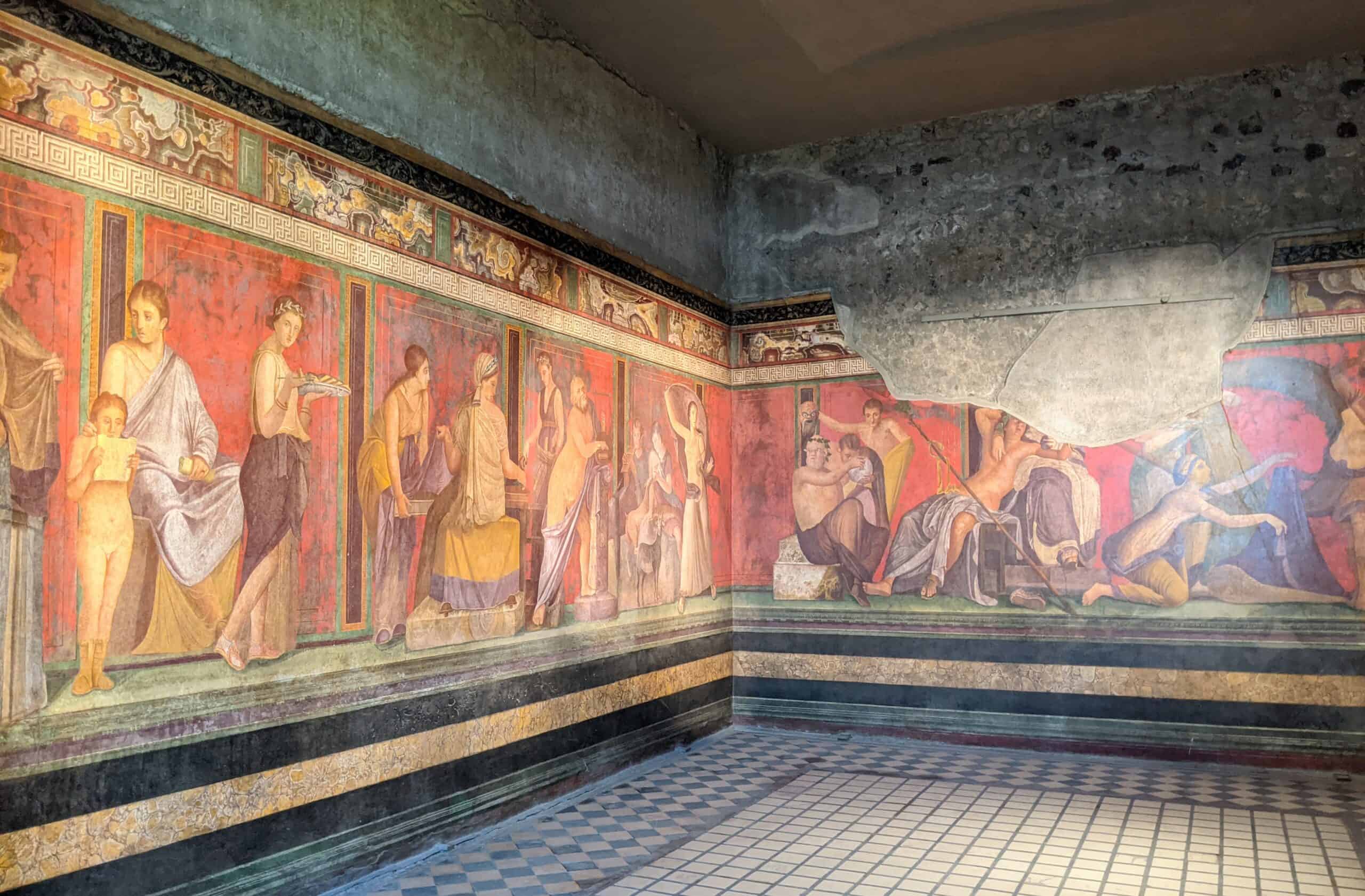
The Villa of the Mysteries gets its name from its famous frescoes. Historians have not completely agreed on what they represent, but most interpret them as an initiation ritual into a Greco-Roman mystery cult.